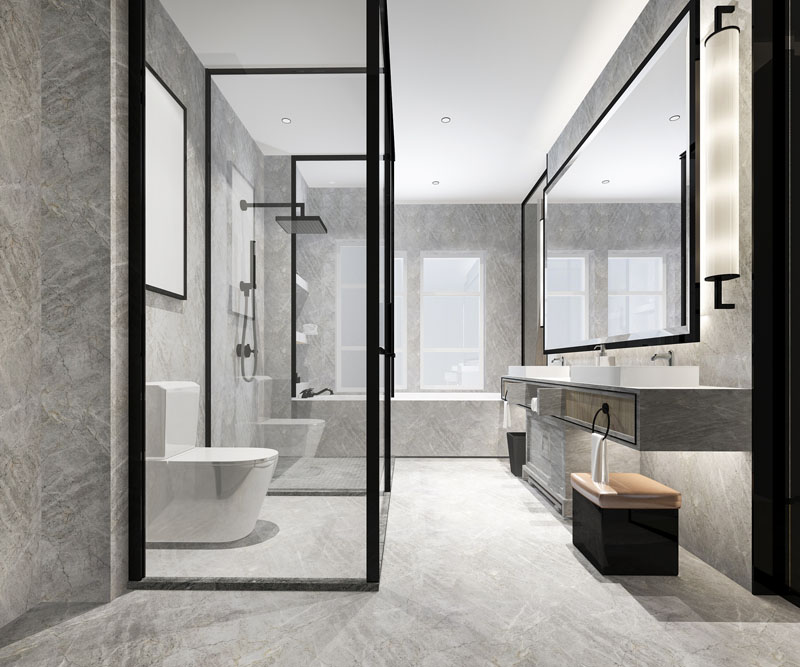
Tile or vinyl for your bathroom? Compare waterproofing, slip resistance, comfort, cost, and installation to choose the right floor for your Toronto bathroom.
A Toronto homeowner's guide to choosing a bathroom floor that stays beautiful and safe
Choosing a bathroom floor comes down to a familiar decision: tile or vinyl. Both stand up to moisture far better than wood, but they differ on waterproofing, slip resistance, comfort, and cost. This guide compares porcelain tile and vinyl click flooring across every factor that matters in a bathroom, so you can choose the right one for your space and budget.
Porcelain Tiles
Porcelain — a dense, high-fired ceramic tile — has been the classic bathroom choice for generations thanks to its durability and timeless look.
- Exceptional durability: Porcelain resists wear, scratches, and heavy traffic for decades.
- Water resistance: With proper sealing and grouting, porcelain forms a hard, water-shedding surface that protects the structure below.
- Diverse styles: From large-format and marble looks to intricate mosaics, the design range is enormous.
- Low maintenance: The surface wipes clean easily, even in a high-moisture room.
- Heat-friendly: Porcelain pairs perfectly with radiant floor heating and stays cool otherwise.
For a fuller look at the material's trade-offs, see our guide to the pros and cons of tile flooring.
Vinyl Click Flooring
Vinyl click flooring (a luxury vinyl / SPC product) has surged in popularity for bathrooms. It's built from multiple layers — a rigid or resilient core, a printed design layer, and a wear layer — that combine durability with a warm, comfortable feel.
- Waterproof: Quality vinyl click is waterproof through the plank, not just on the surface, so it shrugs off bathroom moisture.
- Easy installation: The click-and-lock system floats over the subfloor, which is faster and more DIY-friendly than tile.
- Warmer underfoot: Vinyl feels warmer and softer than tile — welcome on bare feet.
- Convincing looks: Modern printing mimics porcelain, marble, and wood closely.
- Budget-friendly: It delivers a high-end look for less. Our SPC & vinyl flooring service covers the waterproof options in detail.
Tile vs. Vinyl: A Detailed Comparison
Water Resistance
Tile: Porcelain is highly water-resistant when properly sealed, but water can penetrate grout lines if they aren't sealed and maintained — which is why a waterproofing membrane under the tile matters.
Vinyl: Quality vinyl click is inherently waterproof through the whole plank, with far fewer seams than a tiled floor. For pure moisture defence, vinyl has the edge.
Slip Resistance
Tile: Smooth, glossy porcelain can be slippery when wet. Choose a matte or textured tile with a higher slip rating (look for the DCOF/R-rating) for bathroom safety, especially near the shower or tub.
Vinyl: Textured vinyl generally offers good grip underfoot and stays less slick than polished tile when wet, which is one reason it's popular in family bathrooms.
Installation
Tile: Tiling is skilled work — it needs a flat, waterproofed substrate, precise spacing, thin-set, grouting, and curing time. It's best left to a professional.
Vinyl: The click-and-lock system floats over most flat subfloors, making it quicker and more forgiving to install.
Comfort Underfoot
Tile: Durable but hard and cold underfoot, which area rugs or radiant heating can offset.
Vinyl: Noticeably softer and warmer — a real advantage in a room where you're often barefoot.
Maintenance and Grout
Tile: The tile itself is easy to clean, but grout lines need periodic sealing and can stain or harbour mildew if neglected. That upkeep is the main long-term chore with a tiled floor.
Vinyl: With few or no grout lines, vinyl is very low-maintenance — a damp mop and a vinyl-safe cleaner keep it looking new.
Design Flexibility
Tile: Unmatched for intricate patterns, large-format looks, and true stone and marble surfaces.
Vinyl: Extremely versatile at replicating tile, stone, and wood, though it's a print rather than the real material.
Durability and Lifespan
Tile: Porcelain is the more durable material and can last 25 years or more — often the life of the bathroom — resisting scratches, dents, and heavy use. A cracked tile can be replaced individually.
Vinyl: Quality vinyl is very durable and dent-resistant too, typically lasting 15–25 years in a bathroom. Its wear layer resists scratches well, though it can't be refinished — when it's worn, it's replaced.
Cost
Tile: Generally the higher-cost option, reflecting the material and the skilled installation.
Vinyl: The budget-friendly choice, with lower material and installation costs while still delivering waterproofing and style.
A Note on Heated Bathroom Floors
If a warm bathroom floor is on your wish list, tile is the natural partner for radiant floor heating — it conducts and holds heat beautifully and eliminates that cold-underfoot drawback. Many vinyl products are also radiant-compatible, but always confirm the specific product is rated for it and keep the temperature within the manufacturer's limit.
Which Should You Choose?
- Choose porcelain tile if you want maximum durability, a true stone or marble look, intricate design, or a heated floor, and you don't mind the higher cost and grout upkeep.
- Choose vinyl click if you want the best waterproofing with fewer seams, a warmer and softer surface, easier installation, and a friendlier budget.
For a broader look at both rooms, our guide to the best flooring for kitchens and bathrooms covers how each material performs where water is a constant.
Why Professional Installation Matters
In a bathroom, the floor is only as good as what's under it. Tile needs a properly prepared, waterproofed substrate — a membrane or backer board — or water can eventually reach the subfloor through the grout. Vinyl needs a flat, dry subfloor and careful cuts around fixtures to keep water out at the edges. FloorSure is WSIB-covered, fully insured, and backs every installation with a one-year workmanship warranty, so your bathroom floor is watertight and built to last.
Common Bathroom Flooring Mistakes to Avoid
Whichever material you choose, a few missteps cause most bathroom-floor problems:
- Skipping waterproofing under tile. Without a membrane or backer board, water works through the grout to the subfloor over time. This is the single most important step in a tiled bathroom.
- Neglecting grout. Unsealed grout stains and grows mildew. Seal it and reseal periodically.
- Choosing a slippery tile. A glossy tile that looks great dry can be hazardous wet — check the slip rating.
- Poor edge sealing on vinyl. Water gets in at gaps around the toilet, tub, and vanity if cuts and silicone aren't done carefully.
- Ignoring the subfloor. An uneven or damp subfloor undermines either floor — it needs to be flat, dry, and sound first.
Frequently Asked Questions: Tile vs. Vinyl for Bathrooms
Q: Is tile or vinyl more waterproof for a bathroom? Quality vinyl click is waterproof through the whole plank with fewer seams, giving it a slight edge. Porcelain tile is highly water-resistant too, but its grout lines must be sealed and maintained, and it needs a waterproof membrane underneath.
Q: Which is less slippery when wet? Textured vinyl generally grips better than smooth, glossy tile. If you prefer tile, choose a matte or textured finish with a good slip rating for bathroom safety.
Q: Is vinyl or tile cheaper for a bathroom? Vinyl is usually the more budget-friendly option, with lower material and installation costs. Tile costs more, reflecting the material and skilled installation.
Q: Can I install a heated floor under either one? Yes. Tile is ideal over radiant heating and holds warmth well. Many vinyl products are radiant-compatible too — just confirm the product is rated for it and stay within the temperature limit.
Q: Which needs more maintenance? Tile's grout lines need periodic sealing and cleaning to prevent staining and mildew. Vinyl, with few or no grout lines, is lower-maintenance day to day.
Q: Can I install bathroom flooring myself? Vinyl click is DIY-friendly. Tile is skilled work that needs waterproofing and precise setting, so it's best left to a professional to avoid leaks down the road.
Still Deciding on Your Bathroom Floor?
Both tile and vinyl make a durable, water-resistant bathroom floor — the right choice comes down to your priorities on waterproofing, comfort, look, and budget. We're happy to help you compare samples and plan a watertight installation.
Related Guides
- Tile & stone flooring — browse our porcelain and stone tile
- Luxury vinyl plank flooring — waterproof LVP and SPC options
- The best flooring for kitchens and bathrooms — our full guide
Visit our showroom at 9030 Leslie St. Unit 10, Richmond Hill, or contact our team — call or WhatsApp +1 (437) 988-0524. For a wider view of local options, see our guide to flooring installation in Toronto, and we'll help you find the perfect floor for your bathroom.
FloorSure is a fully insured, WSIB-covered flooring & stair installer serving Toronto & the GTA, with a 1-year workmanship warranty on every installation. Call or WhatsApp +1 (437) 988-0524 for a free on-site quote.