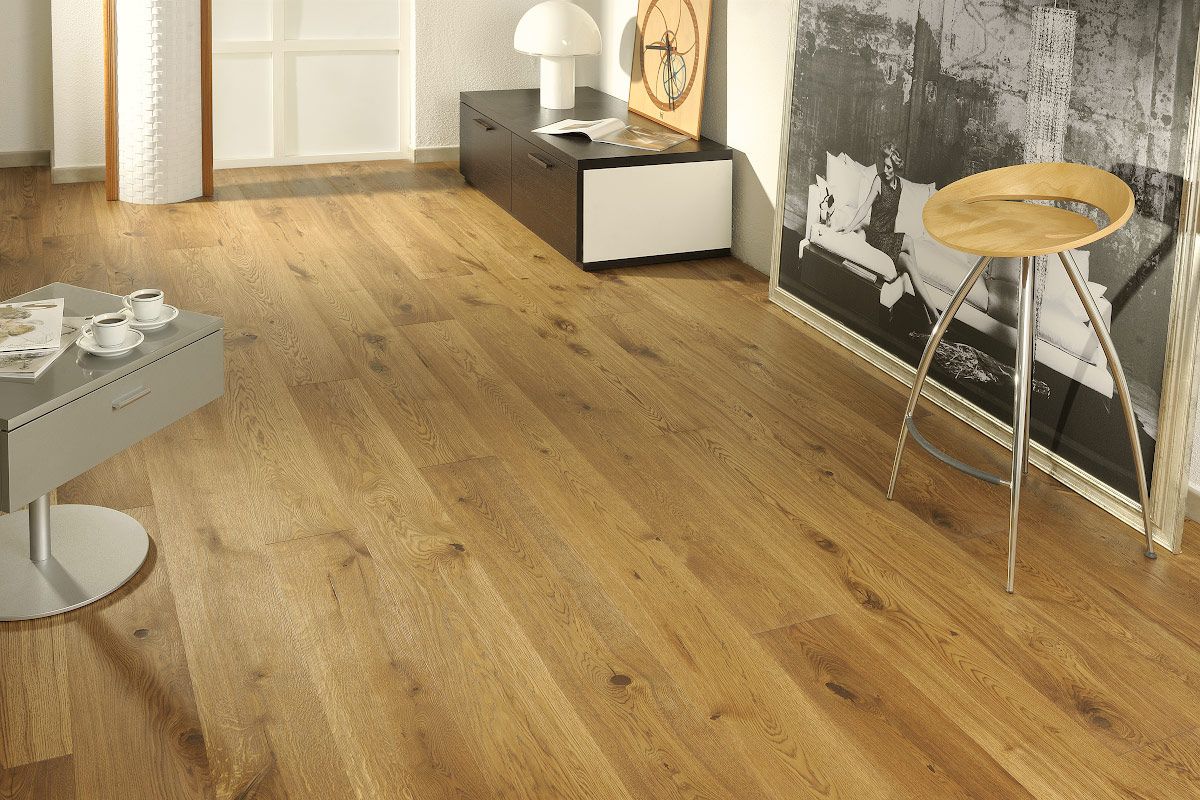
Engineered hardwood vs. laminate flooring, compared head-to-head — appearance, durability, water resistance, installation, lifespan, and cost — for your Toronto home.
A Toronto homeowner's guide to choosing between real wood and the wood look
Choosing between engineered hardwood and laminate is one of the most common decisions Toronto homeowners face. On a showroom floor the two can look almost identical, but they're built very differently and perform very differently over the years. This guide compares them head-to-head — appearance, durability, water resistance, installation, lifespan, and cost — so you can choose with confidence, with a note on where solid hardwood still fits.
Engineered Hardwood Flooring: Real Wood, Built to Last
Engineered hardwood is the most popular hard-surface floor for good reason: it's genuine wood, engineered for stability. Each board has a real hardwood veneer over a multi-ply or layered core, and the quality of that core largely determines the floor's quality.
Pros:
- Temperature and moisture resilience: It handles Toronto's humidity swings and dry, heated winters far better than solid wood, so it stays flatter year-round.
- Design versatility: It comes in wider planks and patterns — herringbone, chevron, and more — that solid wood can't always offer.
- Refinishable: Most engineered floors can be sanded and refinished once or twice, extending their life for decades.
- Real-wood value: Because the surface is genuine hardwood, it adds warmth and resale appeal that a print can't match.
Cons:
- Quality varies: Cheaper boards use thin, water-prone cores that can delaminate or squeak. Core and veneer quality matter — our guide to engineered hardwood for your Toronto home covers what to look for.
- Higher cost than laminate: You pay more for real wood, though less than solid hardwood.
Laminate Flooring: The Budget-Friendly Wood Look
Laminate is a synthetic floor that mimics wood with a high-resolution photographic layer over a dense fibreboard (HDF) core, sealed with a tough wear layer.
Pros:
- Affordability: Laminate is the most budget-friendly hard-surface option.
- Scratch resistance: Its melamine wear layer resists surface scratches and everyday wear very well — often better than real wood at shrugging off scuffs.
- Design variety: A huge range of prints lets you match almost any style.
Cons:
- It isn't real wood: The look is convincing but the pattern repeats, and it can't develop the character of genuine hardwood.
- Moisture sensitivity: Standard laminate swells and warps if water sits on it, though newer water-resistant lines have improved. It can't be refinished — once the wear layer is gone, the floor is replaced.
Engineered Hardwood vs. Laminate: Head-to-Head
- Surface — Engineered: a real hardwood veneer. Laminate: a photographic print.
- Scratch resistance — Engineered: good, and can be spot-repaired. Laminate: an excellent, tough wear layer.
- Water resistance — Engineered: handles humidity but not standing water. Laminate: moisture-sensitive, though water-resistant lines exist.
- Refinishing — Engineered: once or twice. Laminate: not refinishable.
- Lifespan — Engineered: decades. Laminate: roughly 10–20 years.
- Cost — Engineered: higher. Laminate: the lowest.
- Resale appeal — Engineered: higher, thanks to real wood. Laminate: lower.
A few practical takeaways: laminate wins on everyday scratch resistance and price, while engineered hardwood wins on authenticity, refinishing, lifespan, and resale value. For genuinely wet areas — bathrooms, basements, or rentals — neither is ideal; a waterproof SPC & vinyl floor is the better call there. And if budgeting is your main question, our engineered hardwood cost guide breaks down current Toronto ranges.
Installation: How Each Floor Goes Down
Installation is one area where the two are similar — and where the differences matter. Both are most often installed as floating floors, clicking together over an underlay without being fastened to the subfloor, which makes for a relatively fast install. Laminate is almost always floated. Engineered hardwood can also be floated, but it offers two options laminate doesn't: it can be glued down to concrete for a solid, quiet result, or nailed down over a plywood subfloor for a permanent install. That flexibility lets engineered hardwood suit more situations — from a condo over concrete to a main floor over plywood — while laminate is best kept to floating installs over a flat, dry subfloor.
Health and Indoor Air Quality
Both engineered hardwood and laminate use adhesives in their cores, and lower-end products can emit formaldehyde and other VOCs into your home over time. This is one area where buying quality genuinely matters. Look for products certified to recognized low-emission standards (such as CARB2 or equivalent), which cap formaldehyde emissions. Reputable engineered hardwood and laminate lines both offer low-VOC options — the difference is knowing to ask. If indoor air quality is a priority for your household, we'll point you to certified low-emission products in either category.
Day-to-Day Maintenance
Both floors are easy to live with, but the care differs slightly. Laminate is very low-maintenance: sweep and clean with a barely damp cloth or laminate cleaner, and avoid standing water. Engineered hardwood is nearly as simple but prefers a hardwood-specific cleaner and no wet mopping, and it benefits from felt pads and entry mats to protect the real-wood surface. Neither should be cleaned with harsh chemicals or excessive water, which is the fastest way to damage either floor.
Where Solid Hardwood Fits
Solid hardwood remains the most natural, premium option and can be refinished many times over its life. Its drawbacks in Toronto's climate — reactivity to humidity that causes seasonal gaps, and a limited plank width — are exactly why engineered hardwood has largely replaced it for new installations. If you love the idea of solid wood, engineered gives you the same real-wood surface with far better stability.
Which Should You Choose?
- Choose engineered hardwood if you want genuine wood, long-term value, wide planks, radiant-heat compatibility, and the ability to refinish down the road.
- Choose laminate if budget is the priority, you want strong everyday scratch resistance, and you're comfortable replacing rather than refinishing later.
- Choose SPC or vinyl if water resistance is the deciding factor — for bathrooms, basements, or rental units.
Why Professional Installation Matters
Both floors are usually floated with click-lock systems, but the details decide how they perform. A flat, dry subfloor, proper acclimation, and consistent expansion gaps prevent the gaps, peaking, and hollow spots that show up when installs are rushed. Engineered hardwood can also be glued or nailed for a more permanent result. FloorSure is WSIB-covered, fully insured, and backs every installation with a one-year workmanship warranty. Our hardwood flooring service gets the subfloor prep, method, and finishing right the first time.
Frequently Asked Questions: Engineered Hardwood vs. Laminate
Q: Is engineered hardwood better than laminate? It depends on your priorities. Engineered hardwood is real wood, lasts longer, can be refinished, and adds more resale value; laminate is cheaper and highly scratch-resistant. Engineered is the better long-term investment, while laminate is the budget pick.
Q: Which is more water-resistant? Engineered hardwood handles humidity better than solid wood but is still harmed by standing water. Standard laminate is moisture-sensitive, though water-resistant lines exist. For truly wet areas, SPC or vinyl is the safer choice.
Q: Can you refinish laminate or engineered hardwood? Engineered hardwood can usually be refinished once or twice, depending on veneer thickness. Laminate cannot be refinished — when the wear layer is worn, the floor is replaced.
Q: Which floor lasts longer? Engineered hardwood typically lasts for decades and can be refreshed by refinishing, while laminate generally lasts around 10 to 20 years before it needs replacing.
Q: Which is better for resale value? Real wood tends to appeal more to buyers, so engineered hardwood usually adds more resale value than laminate.
Q: Which one is cheaper? Laminate is the most affordable hard-surface flooring. Engineered hardwood costs more but less than solid hardwood, and adds real-wood value.
Make the Right Choice for Your Home
Engineered hardwood and laminate can look alike, but they suit different priorities — real-wood value and longevity versus budget and everyday toughness. The best way to decide is to see samples in your own space and talk through how each will hold up to your household.
Related Guides
- Engineered hardwood flooring — browse our engineered oak collections
- Laminate flooring — durable, budget-friendly options
- Engineered hardwood cost in Toronto (2026) — our pricing guide
Contact our team for a professional consultation, or call or WhatsApp us at +1 (437) 988-0524, and we'll help you choose the floor that's right for your Toronto home.
FloorSure is a fully insured, WSIB-covered flooring & stair installer serving Toronto & the GTA, with a 1-year workmanship warranty on every installation. Call or WhatsApp +1 (437) 988-0524 for a free on-site quote.