Why engineered hardwood is the smart choice for Toronto houses — wide planks, nail-down installation, seamless transitions to tile, and the details that make a whole-home install look custom.
For owner-occupied houses across Toronto and the GTA
Engineered hardwood has become the floor of choice for Toronto homeowners who want the warmth and authenticity of real wood with better stability for our climate. But the product is only half the story — a whole-home engineered hardwood install lives or dies on the details: plank width, installation method, transitions, and the finishing carpentry around it. Here's what makes engineered hardwood the right call for a house, and what a quality install looks like.
Why Engineered Hardwood Suits Toronto Homes
Engineered hardwood is built from a real wood veneer over a stable core of birch or similar plywood layers. That layered construction resists the expansion and contraction that Toronto's humid summers and dry, heated winters cause — the seasonal movement that can open gaps or cup in solid hardwood. You get a genuine hardwood surface that holds up better year-round.
For a house, that stability matters across large, open main floors where temperature and humidity vary room to room. Engineered hardwood also pairs well with the nail-down installation many homeowners prefer for a solid, permanent feel underfoot. If you're weighing it against other options, our engineered hardwood vs. laminate comparison guide breaks down the differences.
Wide Planks for a Premium, Expansive Look
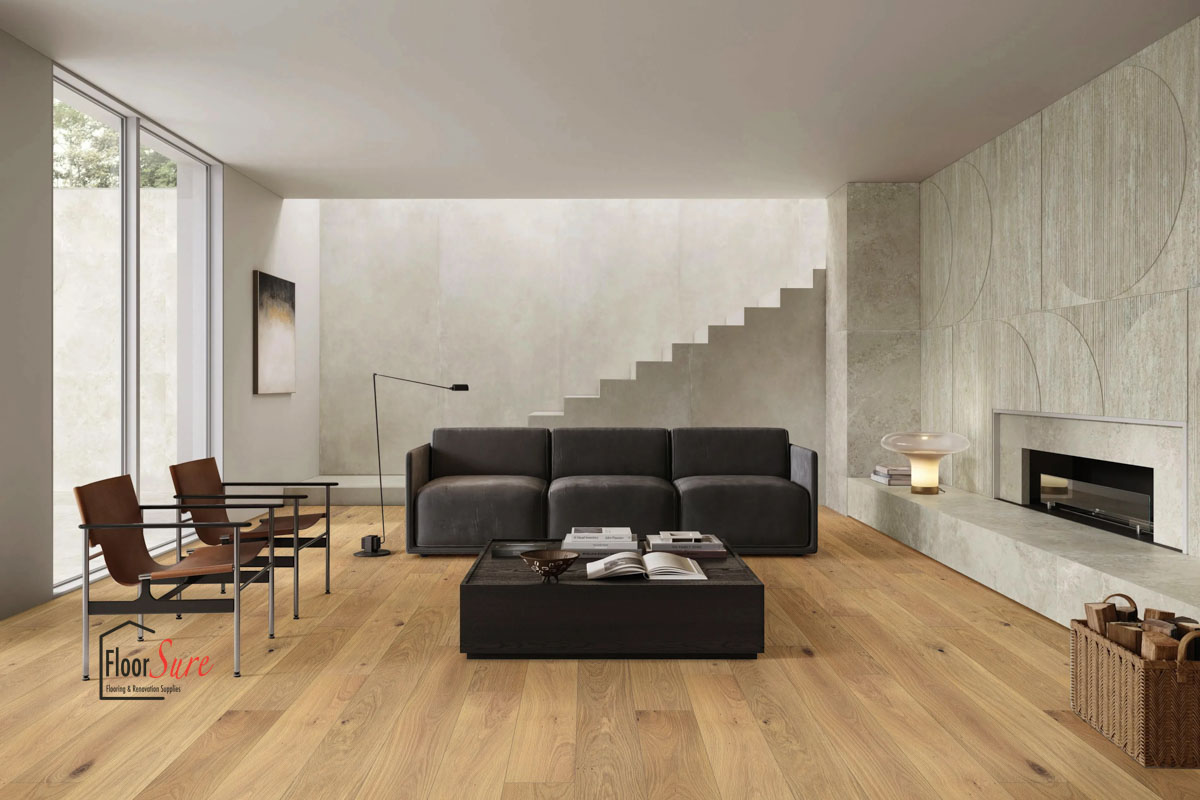
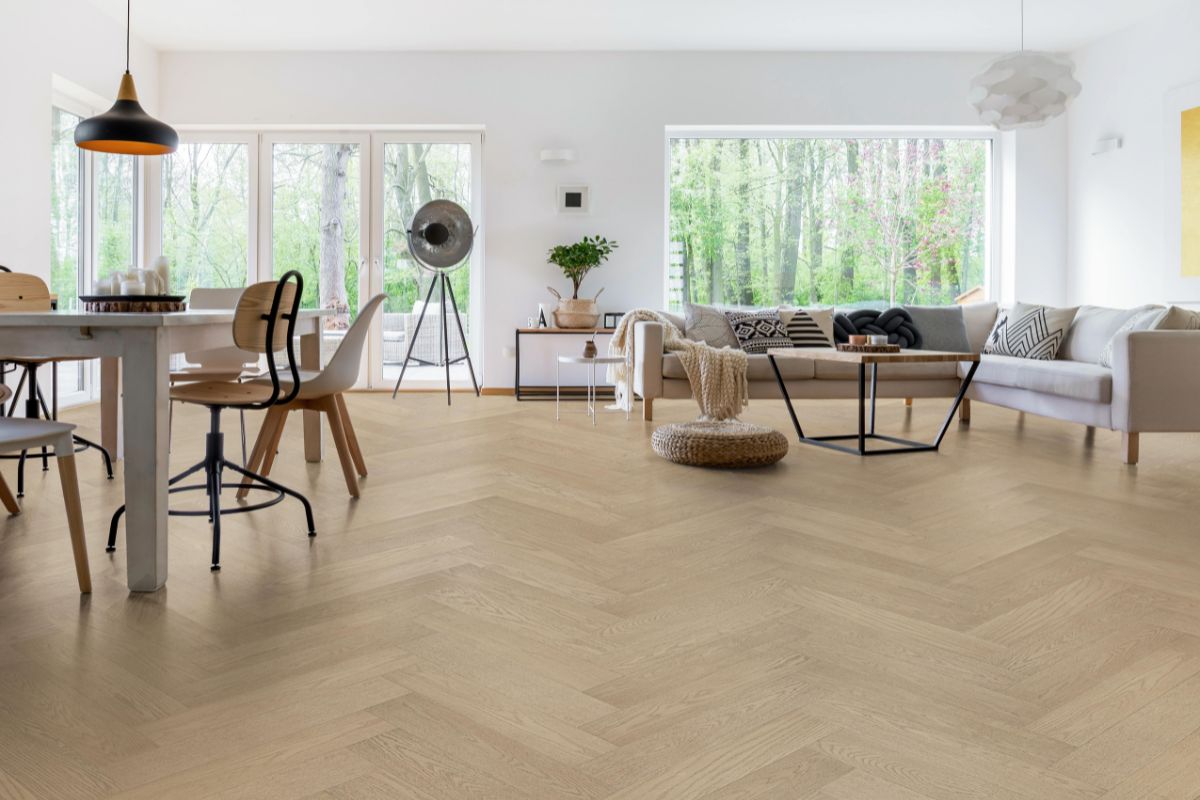
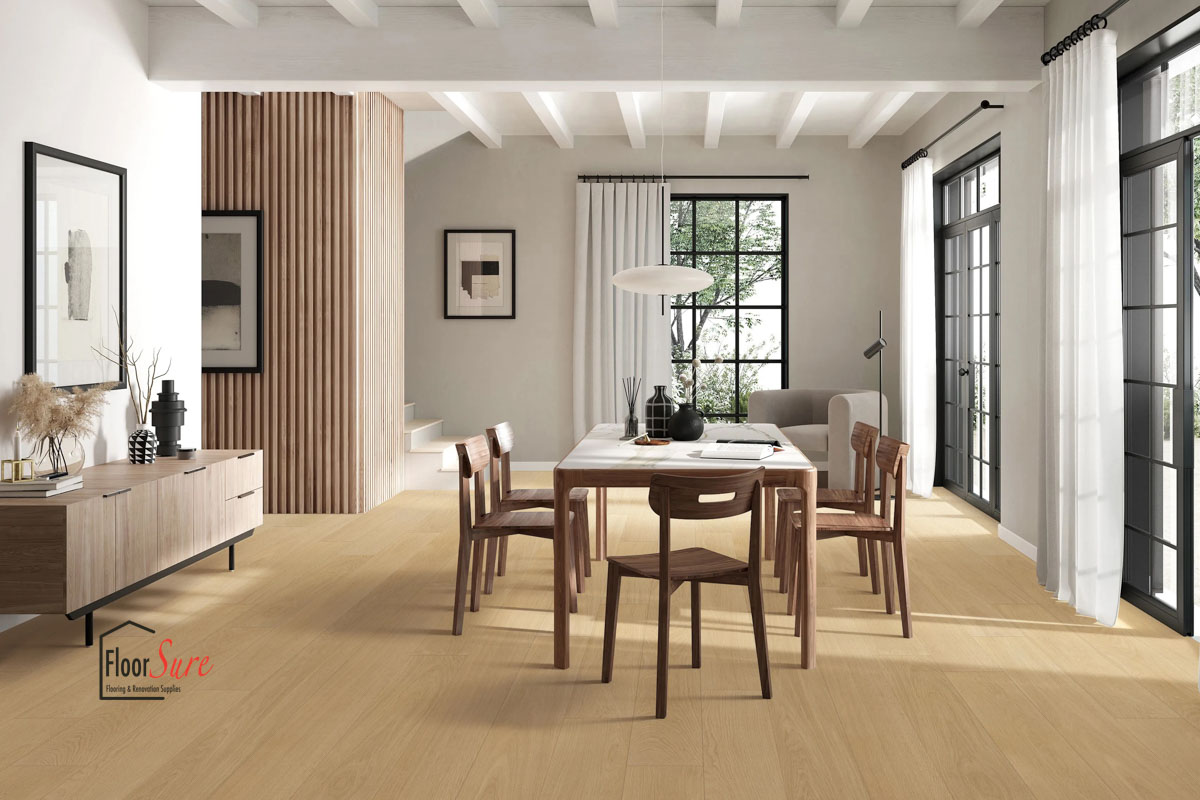
Plank width changes the whole character of a room. Narrow strip flooring reads busy and dated; wide planks — think 7 inches and up — make a space feel larger, calmer, and more high-end. Fewer seams mean the natural grain takes centre stage, and the floor flows uninterrupted across an open-concept main floor.
Wide planks paired with a high-quality veneer and a mix of longer board lengths give that magazine-worthy, custom look homeowners are after. It's one of the simplest ways to make a standard house feel like a designer renovation.
Nail-Down Installation With Glue Assist
How engineered hardwood is fastened matters as much as the wood itself. Over a plywood or wood subfloor — common in Toronto houses — a nail-down installation with glue assist creates a rock-solid floor with no hollow sound and minimal movement. The boards are mechanically fastened and bonded, so the floor feels permanent and quiet underfoot for years.
This is where professional installation earns its keep. Proper subfloor preparation — flattening high spots, re-fastening to eliminate squeaks from the foundation, and checking moisture — is what prevents callbacks later. A floor is only as good as what's underneath it.
Seamless Transitions and Finishing Details
The mark of a true whole-home install is in the transitions. Where the hardwood meets existing tile at an entry, kitchen, or bathroom, a flush, seamless transition looks intentional and clean — no clunky metal strips standing proud of the floor. The same attention applies to custom flush vents that sit level with the boards, and to new modern baseboards that frame the floor and hide expansion gaps neatly.
These finishing touches are what separate a builder-grade job from a custom result. When the floor, vents, baseboards, and transitions are all coordinated, the whole level reads as one considered design. For the staircase that ties it together, see our guide to modern staircase renovation.
Caring for Engineered Hardwood
Engineered hardwood is low-maintenance but not no-maintenance. Sweep or vacuum regularly, clean spills promptly, use felt pads under furniture, and keep indoor humidity in a stable range through the seasons. Done consistently, your floor keeps its looks for decades — and a quality engineered floor can often be lightly refinished down the road thanks to its real wood top layer.
Frequently Asked Questions: Engineered Hardwood for Your Home
Q: Is engineered hardwood real wood? Yes. The surface is a genuine hardwood veneer over a stable engineered core. You get an authentic wood floor with better resistance to seasonal movement than solid hardwood.
Q: Can engineered hardwood be nailed down in a house? Yes. Over a wood subfloor, a nail-down installation with glue assist is an excellent, solid-feeling option — and what we often recommend for Toronto houses.
Q: How wide should the planks be? It's a style choice, but wider planks (around 7 inches and up) make rooms feel larger and more upscale. We'll help you choose a width and length mix that suits your home during the on-site consultation.
Q: How much does engineered hardwood cost? We offer a range of materials, styles, and installation options, so pricing varies by your selection, the area, and the project scope. For current market ranges, see our engineered hardwood cost guide, and contact us for an accurate quote — call or WhatsApp +1 (437) 988-0524.
Plan a Whole-Home Engineered Hardwood Install
Engineered hardwood gives your Toronto home the real-wood look it deserves, with the stability our climate demands — especially in wide planks, properly nailed down, with seamless transitions and clean finishing carpentry. If sourcing matters to you, our European vs. Chinese engineered hardwood analysis is worth a read.
FloorSure is WSIB-covered, fully insured, and backs every install with a one-year workmanship warranty. Contact our team for a professional on-site assessment, or call or WhatsApp +1 (437) 988-0524. We'll help you choose the right product and plan a floor that transforms your whole home.
Related Guides
- Gaps in hardwood floors in winter — why they appear and how engineered stability helps
FloorSure is a fully insured, WSIB-covered flooring & stair installer serving Toronto & the GTA, with a 1-year workmanship warranty on every installation. Call or WhatsApp +1 (437) 988-0524 for a free on-site quote.