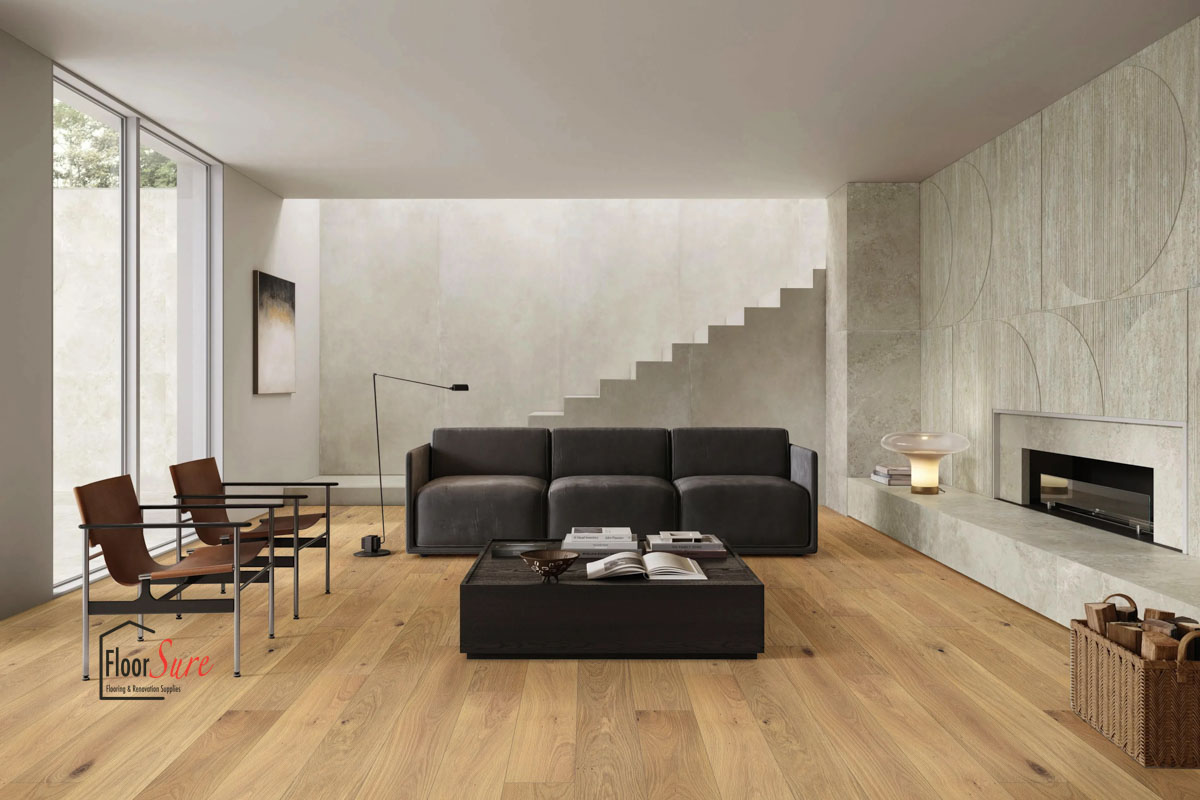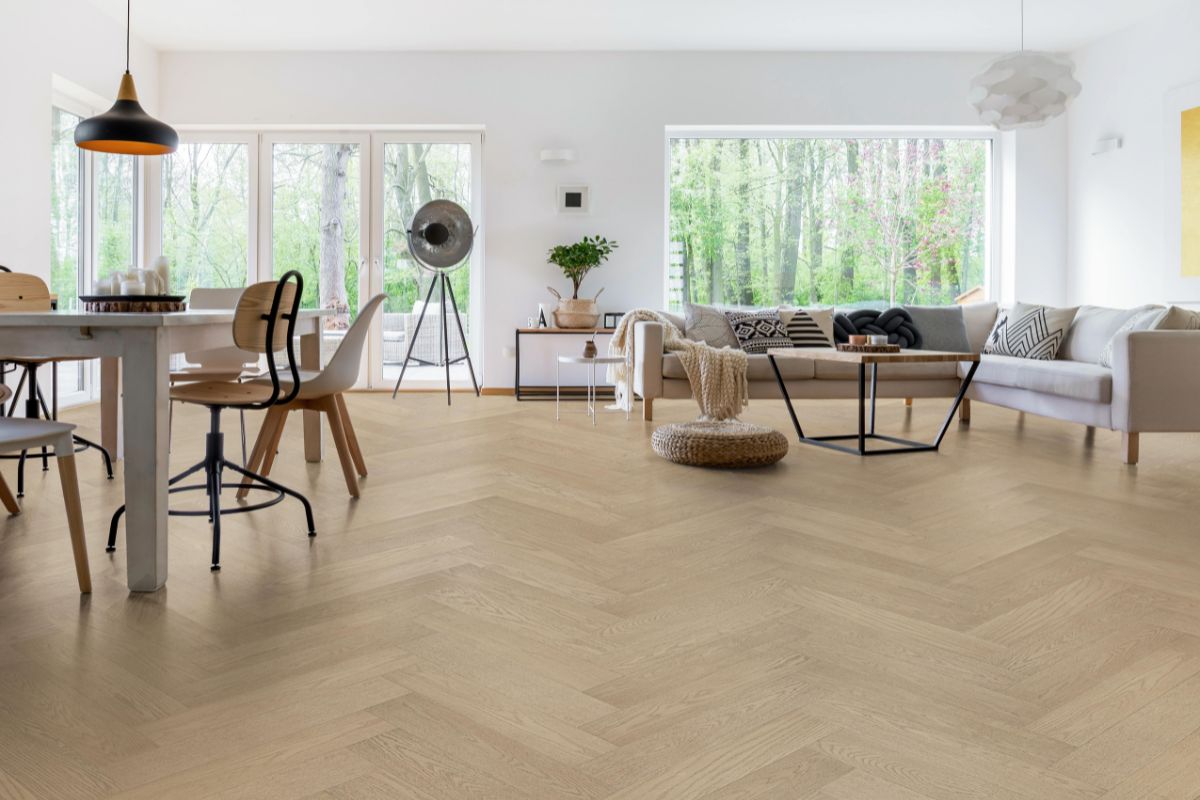
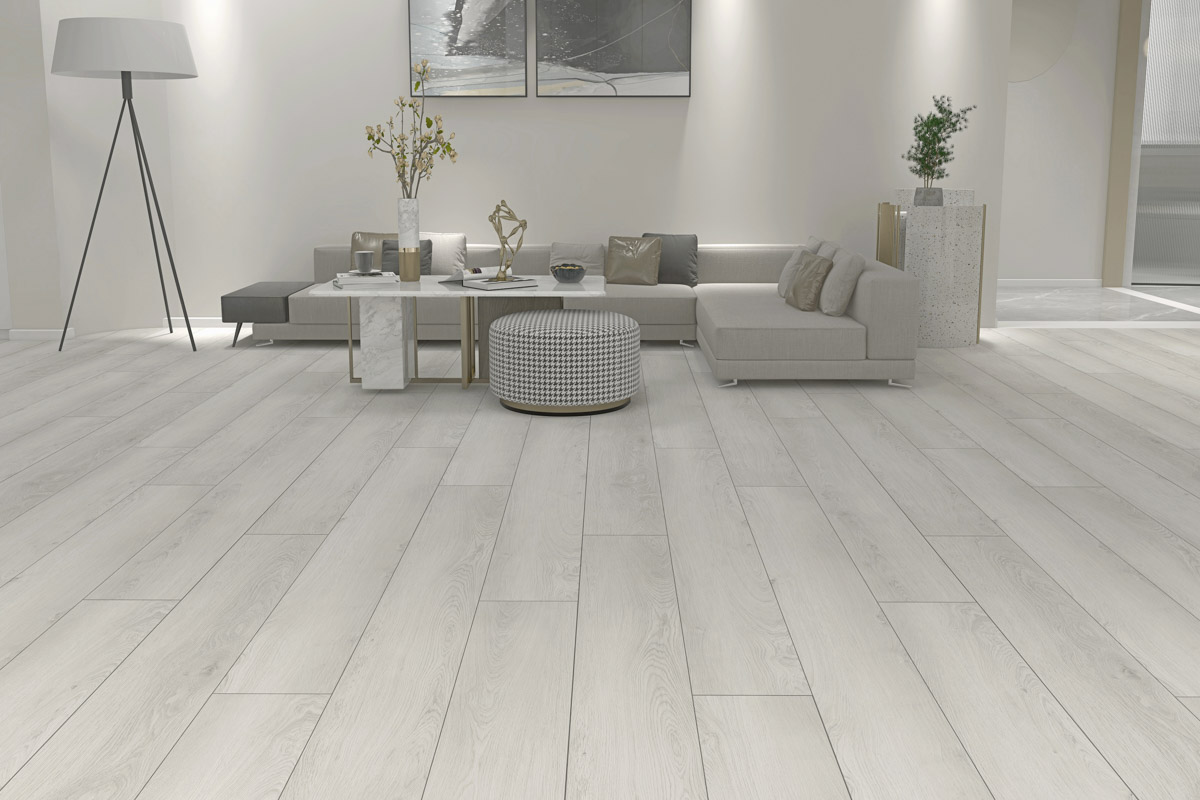
Can you refinish engineered hardwood? It depends on the wear layer. Here's how to tell how many times your floor can be sanded, and when to recoat or replace instead.
What every Toronto homeowner should know about wear layers and refinishing
It's one of the most common questions we hear from homeowners: "Can you refinish engineered hardwood, or do I have to replace the whole floor when it looks tired?" The honest answer is it depends — and the single factor that decides it is the thickness of the wear layer. Once you understand that, you can plan your floor's lifespan with confidence.
The Short Answer: It Depends on the Wear Layer
Yes, engineered hardwood can be refinished — but not every engineered floor can. Unlike solid hardwood, which is a single piece of wood you can sand many times, engineered hardwood is a real-wood veneer bonded to a stable plywood or HDF core. You can only sand away as much as that top veneer allows.
If the veneer is thick, your floor behaves almost like solid wood and can be refinished several times. If it's thin, sanding risks cutting straight through to the core — an expensive mistake. So before anyone touches a sander, the wear layer needs to be identified.
What Is the Wear Layer (and How to Find Yours)?
The wear layer is the top layer of genuine hardwood that sits above the engineered core. It's what you see, walk on, and what gives the floor its character. On engineered products it typically ranges from about 1mm to 6mm thick.
To find yours, check the original product spec sheet or the manufacturer's website using your floor's name and collection. If you no longer have that information, a professional can often gauge it by examining an existing cut edge — for example, at a floor vent, threshold, or along a transition. This is exactly the kind of assessment we do during a free on-site visit before recommending any refinishing work.
If you're still shopping for a floor and want maximum future flexibility, our guide to choosing engineered hardwood for your Toronto home explains what to look for in a veneer.
Wear Layer Thickness: How Many Times Can You Refinish?
Here's the practical breakdown installers use:
- 1mm wear layer: Do not sand and refinish. There simply isn't enough wood to work with. You can still recoat the surface (more on that below), but a full sanding risks exposing the core.
- 2mm wear layer: Can usually be sanded and refinished once, occasionally twice, with a light touch.
- 3mm or thicker: The reliable threshold for genuine refinishing. A 3mm veneer can typically handle a couple of full sand-and-refinish cycles over its life.
- 6mm wear layer: Behaves much like solid hardwood and can be refinished many times — potentially close to a solid floor's lifespan.
The reason the number matters: each full sanding removes a fraction of a millimetre of wood. Sand too aggressively, or start with too thin a veneer, and you can wear through the hardwood and expose the plywood or HDF underneath. That's why refinishing a thin engineered floor is a job for a professional, not a rental sander and a hopeful weekend.
Refinish vs. Recoat vs. Replace
Refinishing isn't the only way to freshen a floor. Knowing the three options saves both money and wear layer:
- Recoat (screen and re-coat): The surface is lightly abraded and a fresh coat of finish is applied — no deep sanding, no wood removed. This is ideal for floors that look dull or lightly scuffed but aren't deeply gouged, and it works even on 1mm floors. It's the most wear-layer-friendly way to renew a floor.
- Refinish (full sand): The floor is sanded back to bare wood and refinished, which removes surface scratches, dents, and lets you change the stain colour. This requires an adequate wear layer.
- Replace: If the veneer is worn through, water-damaged, or too thin to sand, replacement is the sensible route. For scratches and localized damage short of that, our guide to restoring damaged hardwood flooring covers your repair options first.
Why Toronto's Climate Matters
Engineered hardwood is popular in the GTA precisely because its layered core is more stable than solid wood through our humid summers and dry, heated winters. But climate still plays a role in refinishing.
Floors that have gone through years of seasonal swings may show slight gapping or minor cupping. A good refinishing job is done when the home is at a stable, climate-controlled humidity, so the wood isn't mid-swing during sanding. Maintaining a consistent indoor climate year-round also helps preserve both the finish and your manufacturer warranty. If you're weighing engineered against other options, our engineered hardwood vs. laminate comparison is a useful read — laminate, notably, cannot be refinished at all.
When to Call a Pro
Refinishing engineered hardwood is unforgiving because the margin for error is measured in fractions of a millimetre. A professional will confirm your wear layer, choose the right grit and sanding depth, keep the floor flat, and apply a durable finish evenly. On a thin veneer, they'll often recommend a recoat instead of a risky full sand — protecting the wood you have left.
At FloorSure, every project is fully insured, WSIB-covered, and backed by our 1-year workmanship warranty, and our installation methods follow manufacturer guidelines so your product warranty stays intact.
Frequently Asked Questions
How do I know if my engineered floor has already been refinished? Look for a very thin bevel between planks, a slightly uneven stain, or paperwork from a previous refinish. If you're unsure, have it assessed before sanding — a floor that's been refinished before has even less wear layer to spare.
Can a 1mm engineered floor be renewed at all? Yes — just not by sanding. A screen-and-recoat refreshes the finish without removing wood, which is the safe way to renew a thin-veneer floor.
Does refinishing let me change my floor's colour? A full sand-and-refinish does, because the floor is taken back to bare wood before a new stain is applied. A recoat does not change colour, since no wood is exposed.
Is engineered hardwood worth it if the wear layer is thin? It can still be an excellent, stable, good-looking floor — you just plan to recoat rather than deep-sand, and replace when it's genuinely worn. For many Toronto homes that's a perfectly good lifecycle.
Ready to Renew Your Engineered Floors?
Whether your floor needs a simple recoat or a full refinish comes down to one thing: how much wear layer you have to work with. Rather than guess — and risk sanding through a thin veneer — let FloorSure assess your floor first.
We offer a range of refinishing, recoating, and replacement options, and the right approach varies with your specific floor, its wear layer, and the condition it's in, so we'll recommend the solution that protects your investment. For professional advice or a free on-site assessment across Toronto and the GTA, explore our hardwood flooring services or call and message us on WhatsApp at +1 (437) 988-0524.
Related Guides
- Hardwood floor refinishing in Toronto — the complete guide for solid hardwood floors
FloorSure is a fully insured, WSIB-covered flooring & stair installer serving Toronto & the GTA, with a 1-year workmanship warranty on every installation. Call or WhatsApp +1 (437) 988-0524 for a free on-site quote.