White oak engineered hardwood is the most-requested floor in Toronto homes for 2026. Here's why — its warm neutral tone, durability, wide-plank looks, and climate stability.
For homeowners choosing a floor that looks current and lasts
If you've been browsing flooring for your Toronto home, you've probably noticed the same look again and again: light, warm, wide-plank wood with a soft matte finish. That's white oak engineered hardwood, and it has become the default choice for homeowners and designers across the GTA. It isn't just a trend — white oak earns its popularity on looks, durability, and how well it suits our climate. Here's why it's the floor to choose in 2026, and what to look for.
The Colour Everyone Wants Right Now
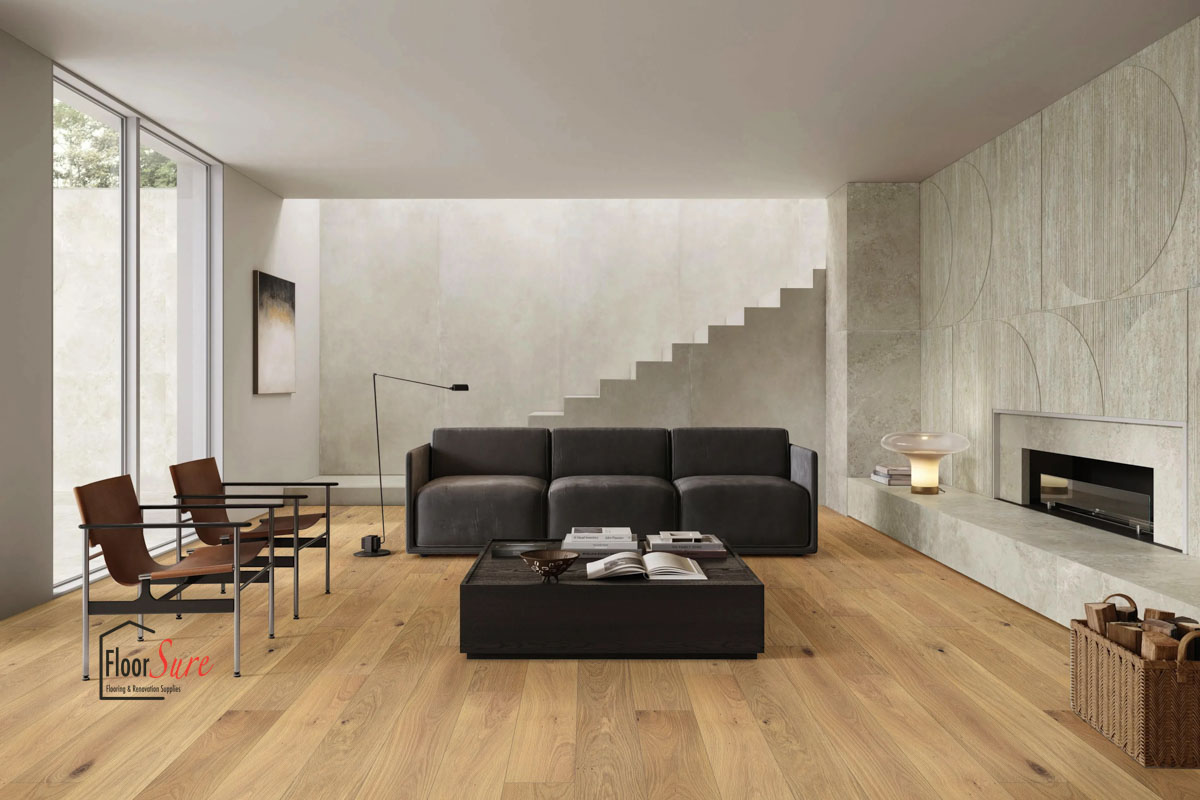
Flooring has moved decisively away from the cool grey tones that defined the last decade. The dominant colour story in 2026 is warm neutrals — light honey, natural medium browns, and "greige" tones that lean warm. White oak sits right at the centre of that palette. Its naturally pale, even grain takes light, warm, and natural finishes beautifully, which is exactly the creamy, calm look buyers and designers are after.
Because white oak is so neutral, it works with almost any wall colour, cabinetry, and furniture style — modern, transitional, or classic. That flexibility is part of why it's the safe-but-stylish pick: it won't date the way a strong grey or red-toned floor can. If you're comparing it against other engineered options, our engineered hardwood for your Toronto home guide covers the broader picture.
Built for Toronto's Climate
White oak's good looks would mean little if the floor didn't hold up. Engineered construction — a real white oak veneer over a stable plywood or birch core — is what makes it dependable in Toronto homes. Our humid summers and dry, heated winters push solid wood to expand and contract, which can open gaps or cup boards. The layered engineered core resists that seasonal movement far better, so your floor stays flat and tight year-round.
You still get a genuine hardwood surface underfoot and to the eye — engineered white oak is real wood, not a print. You simply get it in a format that's better suited to the way Canadian homes heat and cool through the seasons.
Hard-Wearing for Real Family Life
White oak is one of the harder domestic species, which means it stands up well to everyday family traffic, kids, and pets. Paired with a quality wear layer and a modern finish, an engineered white oak floor shrugs off the scuffs and scrapes of daily life better than softer woods. Today's matte and satin finishes also hide micro-scratches and footprints far better than the glossy finishes of years past, so the floor keeps looking fresh between cleanings.
For busy households, that combination — a hard species, a durable finish, and a stable core — is exactly what you want in a floor you'll live on for decades.
Wide Planks and Wire-Brushed Texture
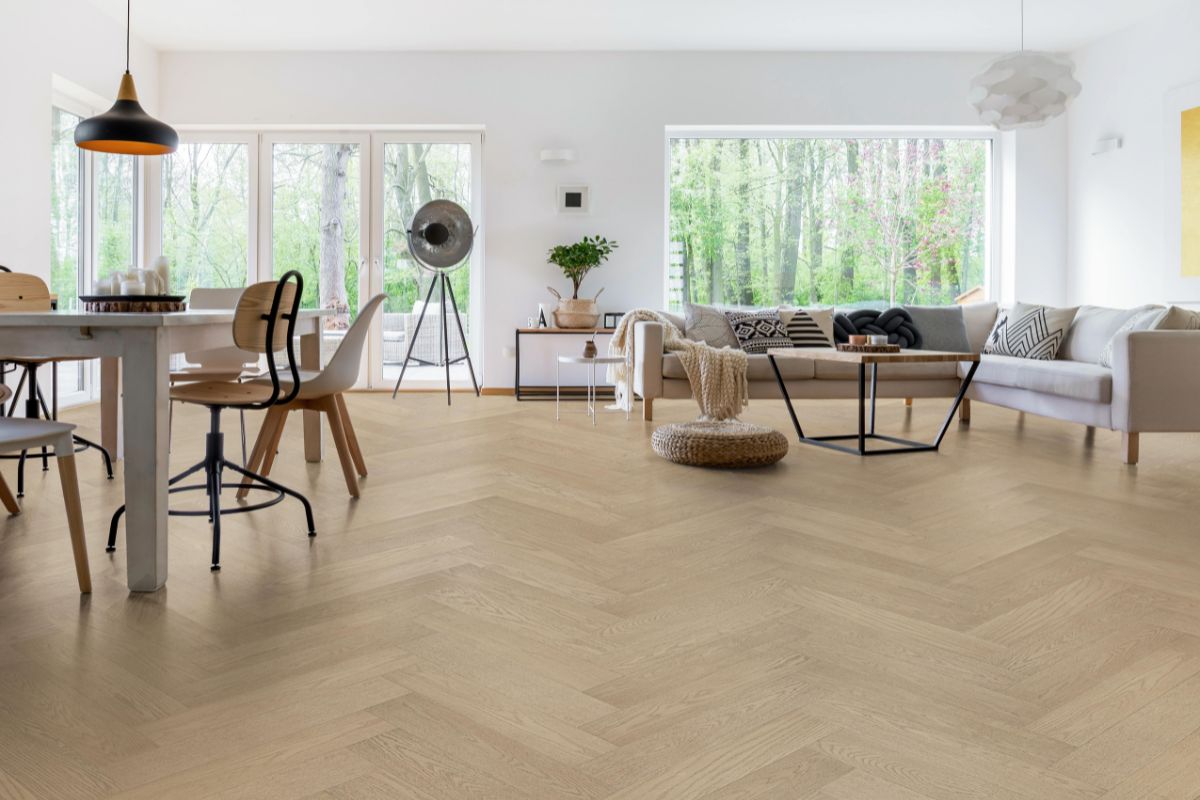
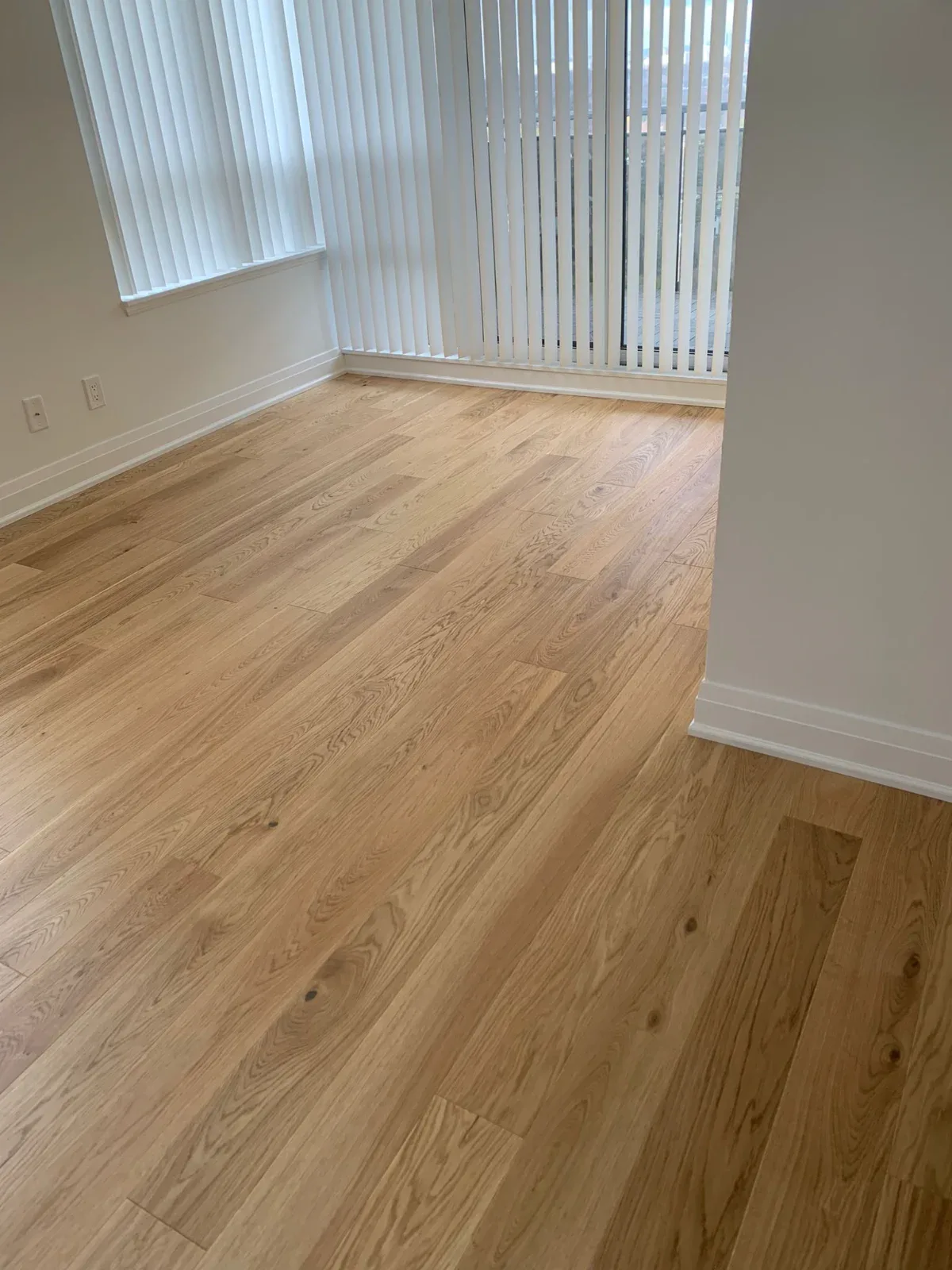
The white oak look that defines 2026 isn't just about colour — it's about format. Wide planks (6 inches and up) make rooms feel larger and calmer, with fewer seams interrupting the grain. A wire-brushed or matte-lacquered texture brings out white oak's natural grain without looking artificial or heavily distressed. Together they create that high-end, magazine-worthy floor homeowners are chasing.
Wide white oak planks are especially effective across an open-concept main floor, where the uninterrupted run of wood ties the whole level together. It's one of the simplest ways to make a standard house feel like a custom renovation.
White Oak vs. Red Oak and Other Species
Red oak — the builder-grade standard in many older Toronto homes — has a pinkish cast and a busier grain that reads more traditional and harder to update. White oak is cooler and more neutral, with a tighter, straighter grain that suits contemporary interiors and takes modern finishes cleanly. That's the main reason so many homeowners replacing dated red oak choose white oak for the refresh.
Engineered white oak also gives you sourcing and budget flexibility across European and domestic options. For a deeper look at how origin affects quality and price, see our European vs. Chinese engineered hardwood analysis.
Frequently Asked Questions: White Oak Engineered Hardwood
Q: Is engineered white oak real wood? Yes. The top layer is a genuine white oak veneer over a stable engineered core. It looks and feels like solid white oak, with better resistance to seasonal movement.
Q: Is white oak good for homes with kids and pets? Yes. White oak is one of the harder domestic species, and a quality wear layer plus a matte finish help it stand up to busy family life and hide everyday marks.
Q: How wide should white oak planks be? It's a style choice, but planks 6 inches and wider give that modern, expansive look. We'll help you choose a width and finish that suits your home during the on-site consultation.
Q: How much does white oak engineered hardwood cost? We offer a range of materials, styles, and installation options, so pricing varies by your selection, the area, and the project scope. For current market ranges, see our engineered hardwood cost guide, and contact us for an accurate quote — call or WhatsApp +1 (437) 988-0524.
Choose a Floor That Looks Right and Lasts
White oak engineered hardwood is popular for good reason: the warm, neutral colour everyone wants, the durability family homes need, the wide-plank style that looks custom, and the stability Toronto's climate demands. It's a floor that looks current today and won't feel dated in five years.
FloorSure is WSIB-covered, fully insured, and backs every installation with a one-year workmanship warranty. Contact our team for a professional on-site assessment, or call or WhatsApp +1 (437) 988-0524, and a professional hardwood flooring service will help you choose the right white oak and plan a floor that transforms your home.
FloorSure is a fully insured, WSIB-covered flooring & stair installer serving Toronto & the GTA, with a 1-year workmanship warranty on every installation. Call or WhatsApp +1 (437) 988-0524 for a free on-site quote.