Planning hardwood throughout your Toronto house? A room-by-room guide to living areas, bedrooms, hallways, stairs, and the transitions that make a whole-home install flow.
For owner-occupied homes going hardwood throughout
There's a reason whole-home hardwood is the gold standard for Toronto houses: one continuous floor flowing from the front entry through the living areas, down the hallways, up the stairs, and into every bedroom makes a home feel larger, calmer, and more valuable. But a successful whole-home install isn't just laying the same board everywhere — it's planning each space and the transitions between them. Here's a room-by-room guide to getting it right.
Start With One Floor, Planned as a Whole
The biggest decision happens before any board is laid: choosing one hardwood to run throughout. Using a single species, colour, and plank width across the main level (and ideally the whole house) is what creates that seamless, expansive feel. Mixing floors room to room chops the home into pieces and makes it feel smaller.
Engineered hardwood is the practical choice for a whole-home job because its stable core handles the temperature and humidity differences between rooms. For why it suits houses specifically, see our guide to engineered hardwood for your Toronto home. Plan the layout direction, too — running planks the length of the home or toward the main light source makes the space feel longer.
Living and Dining Areas
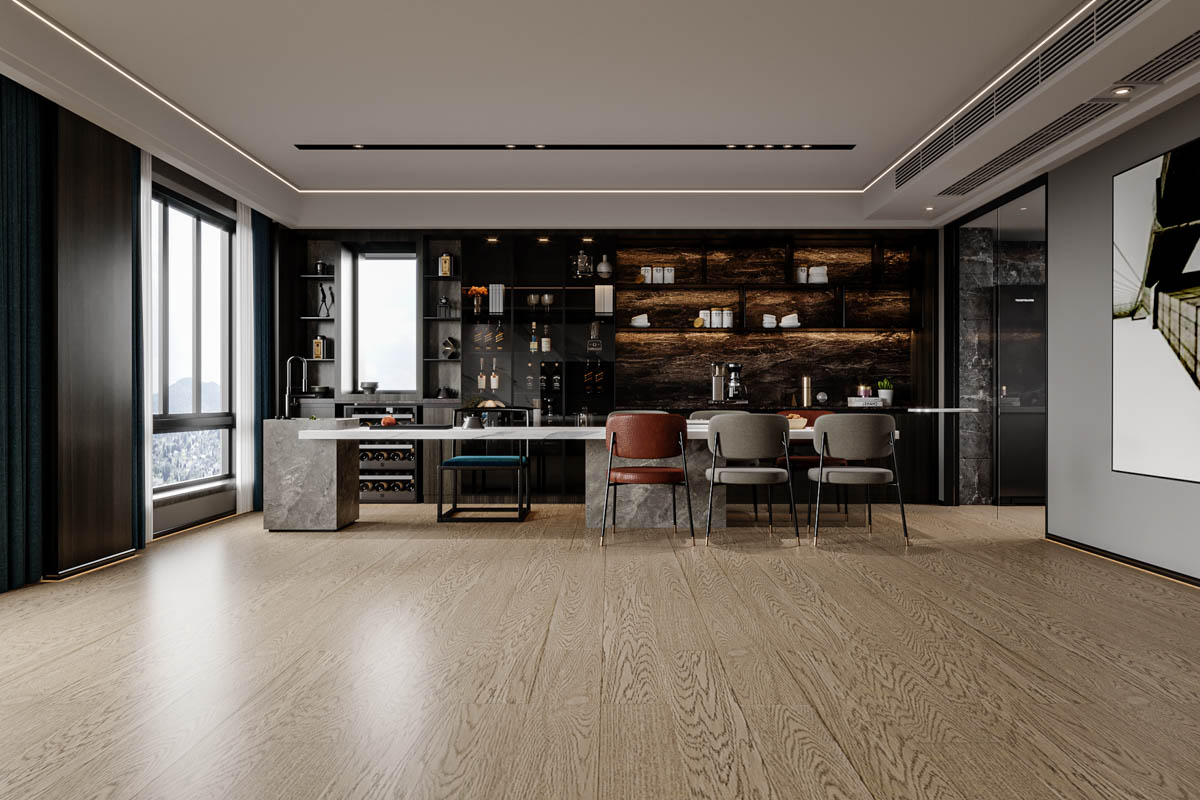
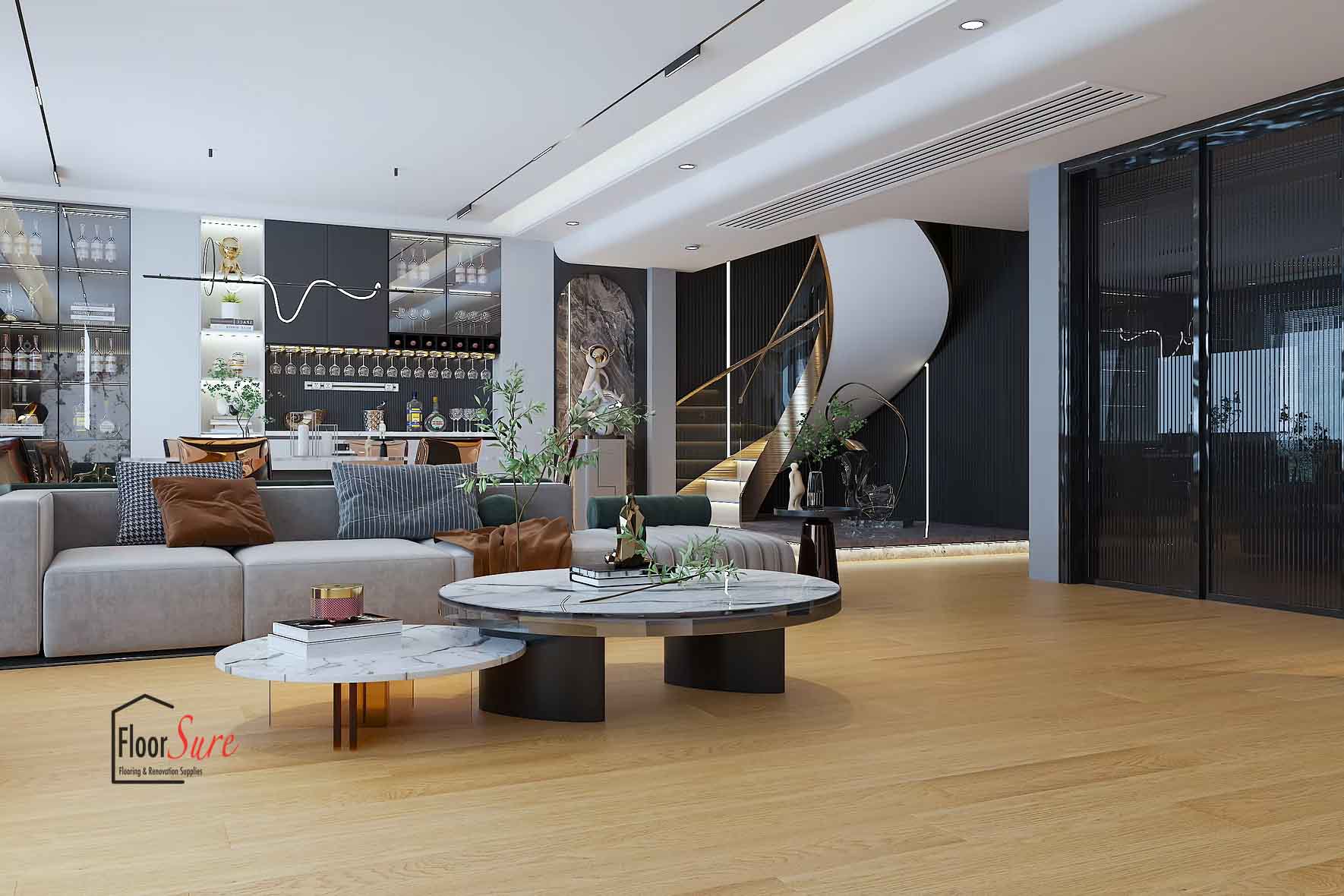
Open-concept living and dining areas are where whole-home hardwood shines. With fewer walls to interrupt it, the floor becomes the unifying surface of the home, so this is where wide planks pay off most — the long, uninterrupted runs look high-end and make the space feel generous. These are also high-traffic, high-visibility rooms, so a durable wear layer and a matte finish that hides everyday marks are worth prioritizing here.
Bedrooms
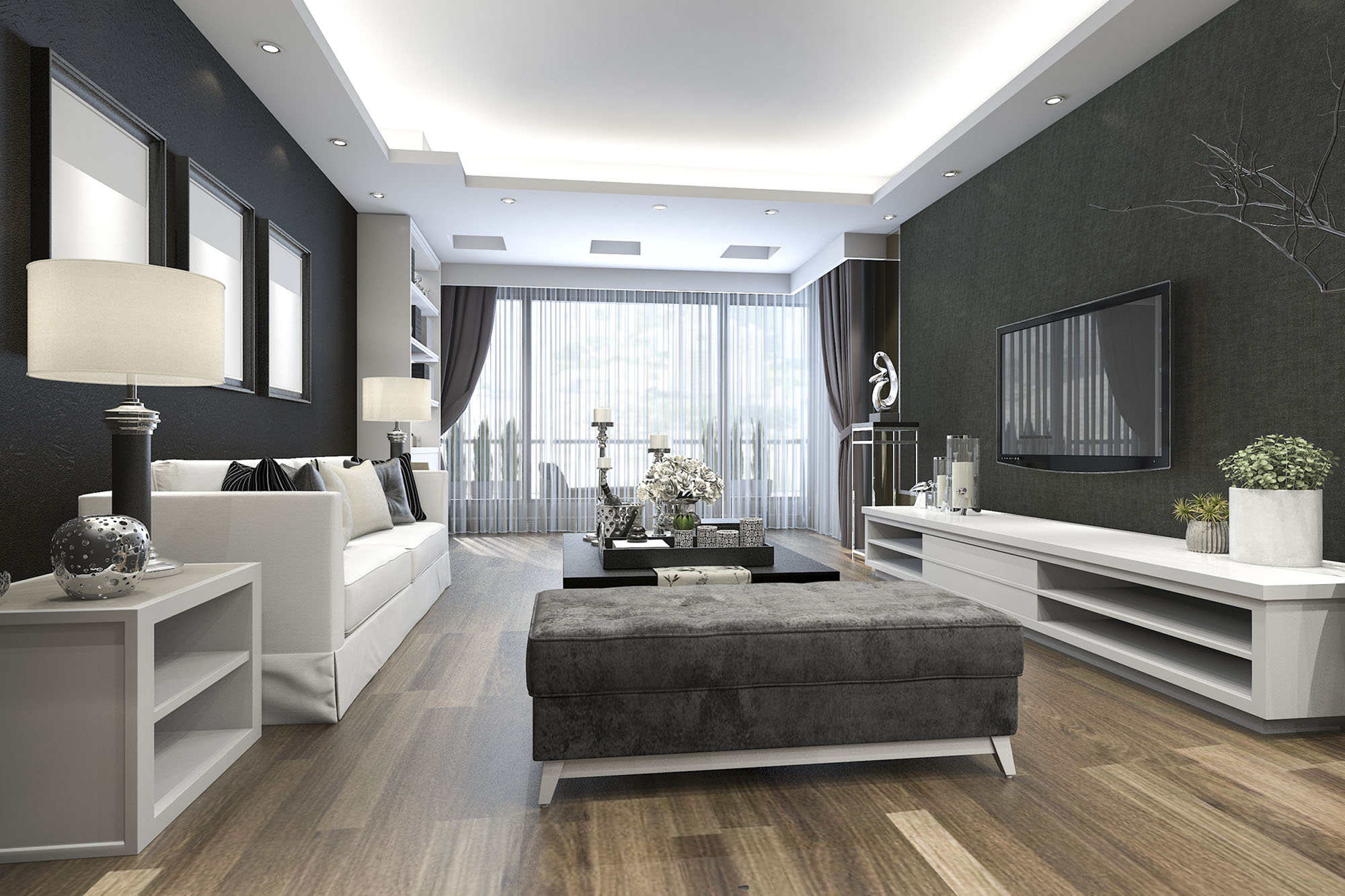
Bedrooms benefit from the warmth and quiet of hardwood over the dust-trapping carpet many Toronto homes still have. Running the same floor into the bedrooms keeps the home cohesive and is a strong selling point — buyers increasingly expect hardwood throughout rather than carpeted bedrooms. Hardwood is also the healthier choice for anyone with allergies, since it doesn't hold dust, dander, and allergens the way carpet does.
Hallways and Transitions
Hallways are narrow, busy, and connect everything, so continuity matters most here. Running the floor straight through without unnecessary thresholds keeps the home flowing. Where hardwood meets tile at an entry, kitchen, or bathroom, a flush, seamless transition looks intentional and clean — far better than a clunky metal strip standing proud of the floor. These transition details, along with new matching baseboards, are what separate a builder-grade job from a custom result.
Stairs: The Piece That Ties It Together
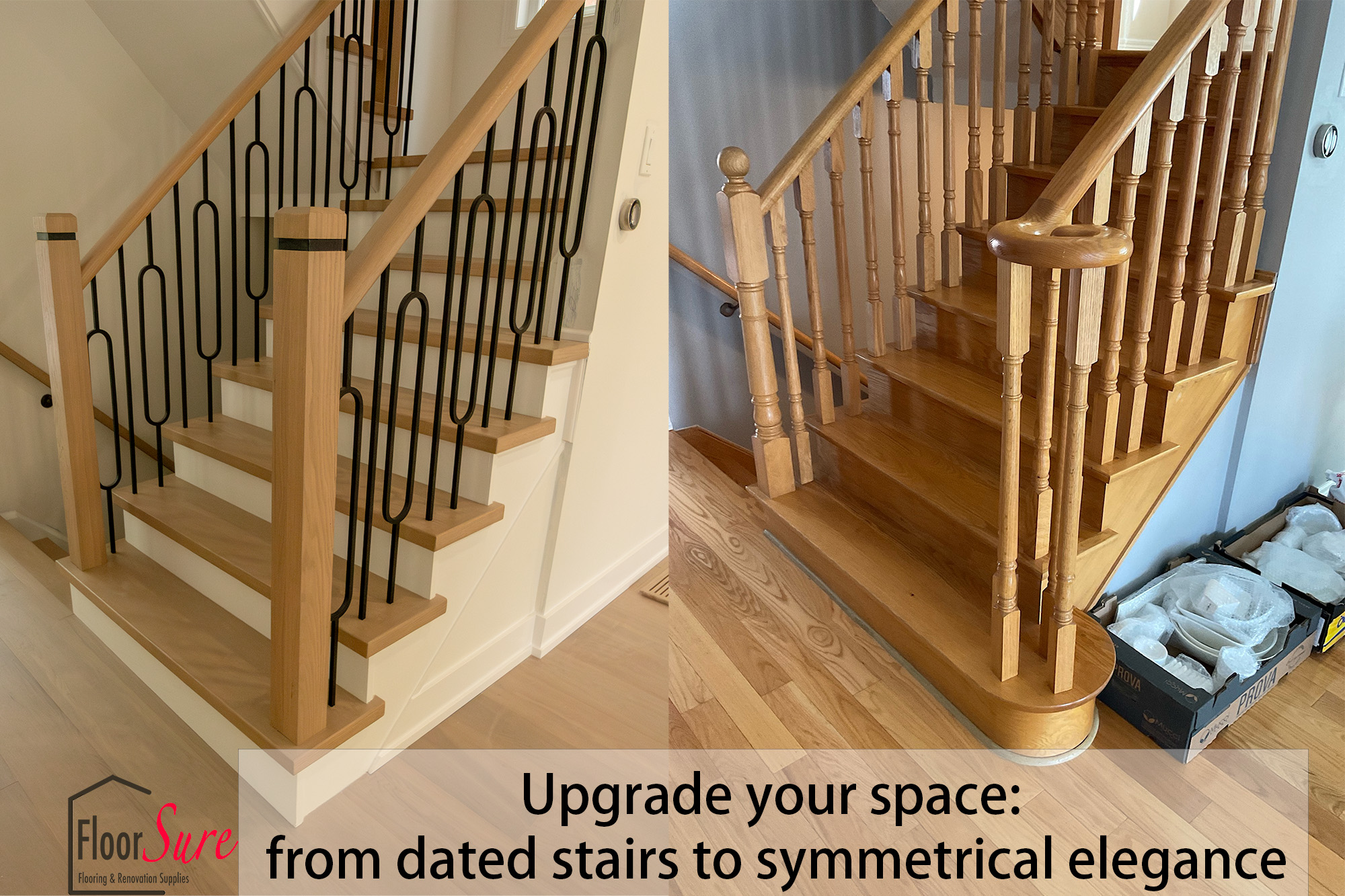
Stairs are the one element homeowners most often forget — and the one that stands out most if it's left behind. When you run hardwood through the home but leave dated, carpeted, or mismatched stairs, the staircase undercuts the whole renovation. Matching the stairs to your new floor is what makes the project feel complete.
A full staircase renovation — stain-matched treads, modern iron spindles, and clean detailing — brings the stairs up to the standard of the rest of the home. If your stairs are currently carpeted, our guide to replacing carpet on stairs with hardwood walks through that specific upgrade.
Kitchens and Bathrooms
Kitchens are increasingly part of the continuous hardwood run, which looks seamless and modern — just be mindful of standing water and clean spills promptly. Full bathrooms, with their constant moisture, are usually the one place a waterproof tile or vinyl makes more sense than wood. Planning these wet areas thoughtfully, with clean transitions where the materials meet, keeps the whole-home look intact without putting wood where it shouldn't go.
Frequently Asked Questions: Whole-Home Hardwood
Q: Should I use the same hardwood in every room? For the most spacious, cohesive look, yes — one species, colour, and plank width throughout the main living areas and bedrooms. Wet bathrooms are the usual exception.
Q: Can the stairs match my new floor exactly? Yes. We stain-match treads to your floor, accounting for wood species and lighting, so the staircase reads as a natural extension of the level.
Q: Is hardwood better than carpet in bedrooms? For cohesion, resale value, and allergy-friendliness, most homeowners prefer hardwood throughout, including bedrooms.
Q: How much does whole-home hardwood cost? We offer a range of materials, styles, and installation options, so pricing varies by your selection, the area, and the project scope. Contact us for a quote and the right plan for your home — call or WhatsApp +1 (437) 988-0524.
Plan Your Whole-Home Hardwood the Right Way
Whole-home hardwood is one of the highest-impact upgrades you can make to a Toronto house — but only when the living areas, bedrooms, hallways, stairs, and transitions are planned together as one design. That coordination is exactly what a professional hardwood flooring service brings.
FloorSure is WSIB-covered, fully insured, and backs every install with a one-year workmanship warranty. Contact our team for a professional on-site assessment, or call or WhatsApp +1 (437) 988-0524, and we'll plan a floor that flows beautifully through your entire home.
FloorSure is a fully insured, WSIB-covered flooring & stair installer serving Toronto & the GTA, with a 1-year workmanship warranty on every installation. Call or WhatsApp +1 (437) 988-0524 for a free on-site quote.