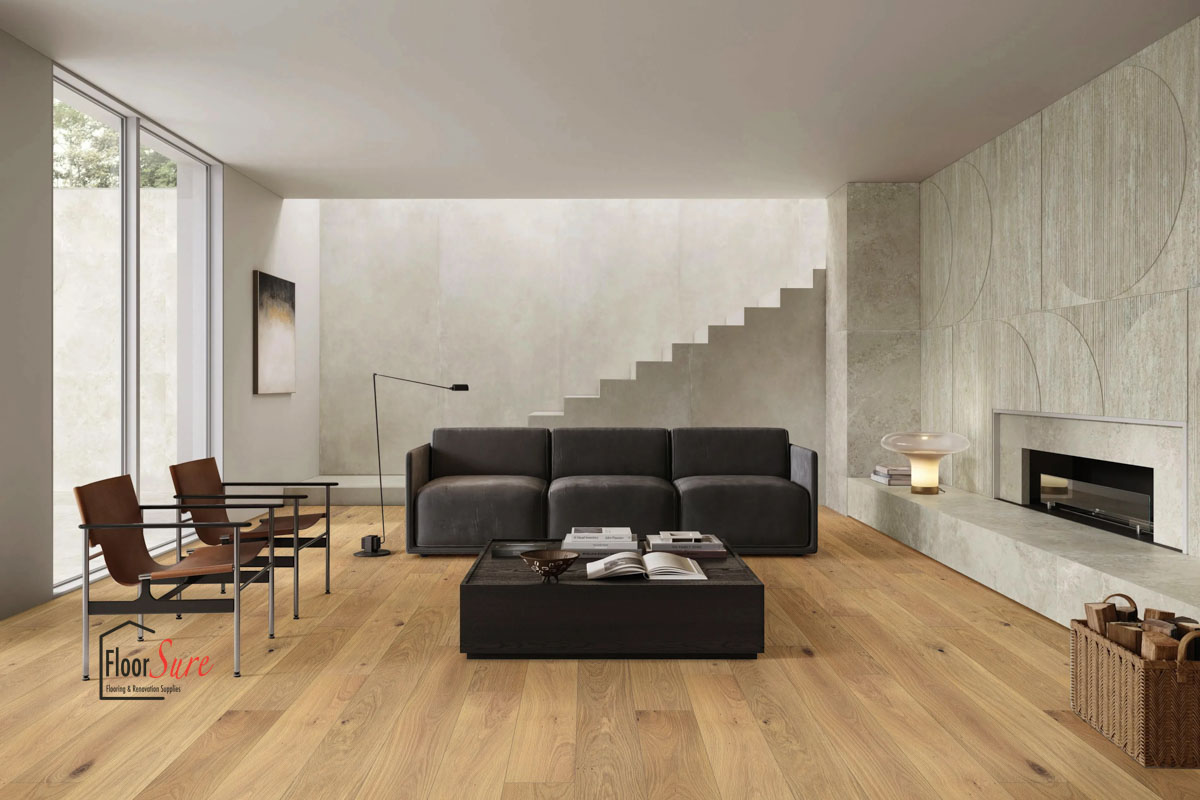
Solid vs. engineered hardwood — how they really differ on stability, refinishing, cost, and where each works best in a Toronto home. An honest, side-by-side comparison.
An honest, side-by-side guide for Toronto homeowners choosing a wood floor
Both are real wood. Both look beautiful. On a showroom floor you often can't tell them apart. But solid and engineered hardwood are built differently, and those differences decide how each performs in a Toronto home — over the seasons, over concrete, and over decades. This guide compares solid vs. engineered hardwood head-to-head on the things that actually matter, so you can choose the right one for your space.
The Core Difference: How They're Built
The distinction is entirely in the construction.
Solid hardwood is exactly what it sounds like — each plank is milled from a single piece of hardwood, the same wood all the way through. Engineered hardwood has a top layer of genuine hardwood (the wear layer) bonded to a core of cross-layered plywood or HDF. The surface you see and walk on is real wood in both cases; the difference is what's underneath.
That underlying structure is why the two behave so differently once they're installed. Everything below flows from it.
Stability and Toronto's Climate: Advantage Engineered
Wood expands and contracts with humidity, and Toronto puts floors through a lot — humid summers and dry, heated winters. This is where engineered hardwood has a clear edge. Its cross-layered core pushes against seasonal movement, so it stays more dimensionally stable, with less gapping in winter and less risk of cupping in humid months.
Solid hardwood, being one piece of wood, moves more and is more sensitive to humidity swings and moisture. That makes engineered the safer choice over concrete — think condos and basements — and in any home where you'd rather not fuss over indoor humidity. Our guide to engineered hardwood for your Toronto home covers this stability in more depth, and if seasonal movement is on your mind, our piece on gaps in hardwood floors in winter is worth a read.
Refinishing and Lifespan: Advantage Solid
Here the tables turn. Because solid hardwood is wood all the way through, it can be sanded and refinished many times over its life — often enough to last generations, and always an option when the floor looks tired or you want a new colour. With proper care, a solid floor can be a decades-long, even lifetime, surface.
Engineered hardwood can also be refinished, but only as far as its wear layer allows: a thick veneer (3mm or more) can handle a few sandings, while a thin one may only be recoated. So if being able to refinish repeatedly is a priority, solid has the advantage — though a quality engineered floor with a thick wear layer narrows the gap considerably. Our guides to hardwood floor refinishing and refinishing engineered hardwood explain both.
Cost and Value
Cost depends far more on the species, grade, and quality than on the solid-vs-engineered label. That said, a few general patterns hold: engineered hardwood is often more affordable than solid in comparable species, until you reach premium collections where the two overlap. Installation can also be quicker for engineered (especially floating floors), which affects the total.
Both add real resale value to a home — buyers recognize genuine hardwood, and neither reads as a "lesser" floor. Rather than chase a per-square-foot number online, it's worth getting a quote for your actual space and material, since prices vary with your selection, area, and installation needs. Call or WhatsApp us at +1 (437) 988-0524 for an accurate figure.
Where Each One Works Best
The simplest way to choose is by where the floor is going:
- Basements and concrete slabs → engineered, for stability and moisture tolerance.
- Condos → engineered, which also pairs well with acoustic underlay for building sound requirements.
- Main-floor living areas over a wood subfloor → either works; solid is a classic choice you can refinish for decades.
- Homes where you want maximum long-term refinishing → solid.
- Homes where you'd rather not manage humidity closely → engineered.
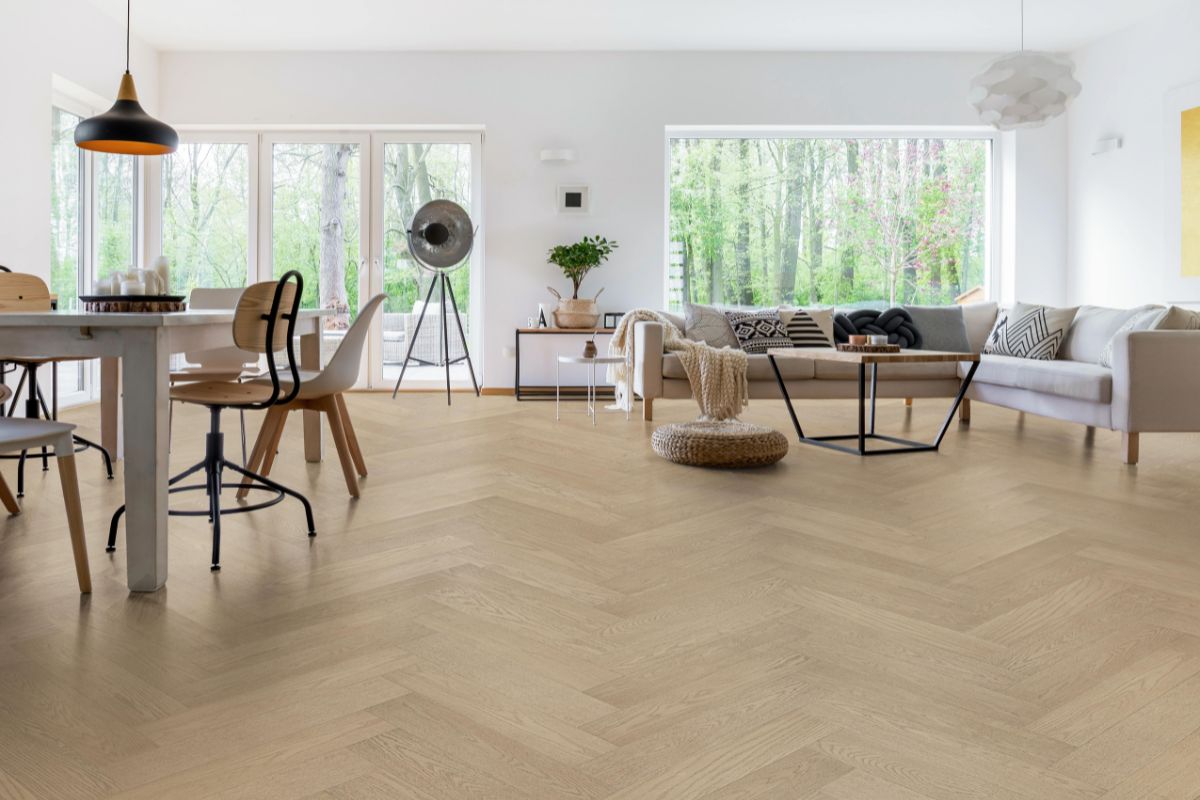
- Wide planks and patterns like herringbone → usually engineered, for stability across many seams.
Many Toronto homes end up using both — engineered downstairs or in the basement, solid on the main floor — and a good installer can match them for a seamless look.
How to Choose: A Quick Decision Guide
Ask yourself three questions:
- Where is it going? Over concrete, in a basement, or in a condo → lean engineered. On a wood subfloor upstairs → either.
- How much do you care about refinishing? Want to sand it back many times over decades → solid, or engineered with a thick wear layer.
- How stable is your indoor climate? If winters get very dry and you won't run a humidifier → engineered handles it better.
There's no universally "better" floor — only the better fit for your home, your budget, and how long you plan to stay. If you're still deciding between wood types altogether, our overview of solid, engineered, and laminate flooring puts all three side by side, and you can browse both in our engineered hardwood and hardwood flooring collections.
Two Common Myths, Cleared Up
A couple of misconceptions steer homeowners wrong, so it's worth setting them straight:
- "Engineered hardwood isn't real wood." It is. The surface is genuine hardwood — the same species, grain, and feel as solid. Only the core beneath is engineered for stability, which is a feature, not a compromise.
- "Solid is always the higher-quality choice." Not necessarily. A premium engineered floor with a thick wear layer can outperform a budget solid floor on stability and still refinish beautifully. Quality lives in the species, grade, wear layer, and finish — not in the label alone.
- "Engineered can't be refinished." It usually can, at least once or twice — and a thick-veneer engineered floor several times. What you can't do is sand a paper-thin wear layer, which is why veneer thickness matters when you buy.
Judging a floor by solid-vs-engineered alone misses what actually matters. The better question is which construction suits your room — and then how good the wood and finish are within that choice.
Frequently Asked Questions
Is engineered hardwood real wood? Yes. Engineered hardwood has a top layer of genuine hardwood bonded to a stable plywood or HDF core. The surface you see and walk on is real wood — it looks and feels the same as solid; the difference is the construction underneath.
Which lasts longer, solid or engineered hardwood? Solid can last the longest because it can be refinished many times. A quality engineered floor with a thick wear layer also lasts for decades and can be refinished a few times. Both are long-term floors when cared for.
Can I put engineered hardwood in a basement? Yes — engineered is the recommended wood floor for basements and over concrete because its stable core handles the moisture and temperature conditions far better than solid hardwood.
Is engineered hardwood cheaper than solid? Often, in comparable species, though premium engineered collections can match or exceed solid. Cost depends more on species, grade, and quality than on the type, so compare like-for-like and get a quote for your space.
Which should I choose for my Toronto home? It depends on where the floor is going and how you'll use it: engineered for basements, condos, concrete, and low-fuss stability; solid for main-floor rooms where you want to refinish for generations. Often both, in different areas.
Ready to Choose the Right Hardwood for Your Home?
Solid vs. engineered isn't about which is "better" — it's about matching the floor to your space, your climate, and how long you want to refinish it. Engineered wins on stability and works anywhere, including basements and condos; solid wins on refinishing and longevity for main-floor rooms. Seeing samples in your own light is the best way to decide.
FloorSure is a fully insured, WSIB-covered flooring specialist serving Toronto and the GTA, and every installation is backed by our 1-year workmanship warranty. We offer a full range of both solid and engineered hardwood, and the right choice — and the cost — varies with your home, subfloor, and how the space is used, so let us help you compare and choose. Explore our hardwood flooring services, or call or message us on WhatsApp at +1 (437) 988-0524 to book a free on-site consultation.